Precision Micros Precision Micros

How to Choose the Best Small Electric Motors from China

Time:2026-10-14 Author:Henry
0%

Choosing the best Small Electric Motors from China requires more than comparing prices. A low quotation can hide weak bearings, unstable torque, or poor quality control. The right decision begins with the application: required voltage, continuous torque, starting load, speed range, duty cycle, noise level, and available installation space.

Thomas Edison’s practical reminder remains useful here: “The value of an idea lies in the using of it.” A motor must work reliably inside your product, not only perform well on a supplier’s test bench. Ask manufacturers for clear datasheets, winding specifications, efficiency results, temperature-rise data, and stall-current limits. Request samples before approving a larger order. Test them under realistic conditions, including repeated starts, heat exposure, vibration, and sudden load changes.

Small details matter.

A motor that sounds smooth at room temperature may become noisy after several hours. A compact gearbox may produce impressive torque but fail during frequent reversals. Certifications and an ISO 9001 certificate can support confidence, but they do not replace independent testing or factory communication. Review the supplier’s production experience, inspection process, tooling capability, warranty terms, and response speed. Video calls can reveal useful details, such as assembly cleanliness and test equipment, although they are not complete evidence.

This guide explains how to compare Chinese manufacturers, specifications, samples, and total purchasing costs. It also considers shipping protection, minimum order quantities, customization risks, and after-sales support. Some recommendations may not fit every project. That is the point: careful reflection prevents a seemingly inexpensive motor from becoming an expensive product problem.
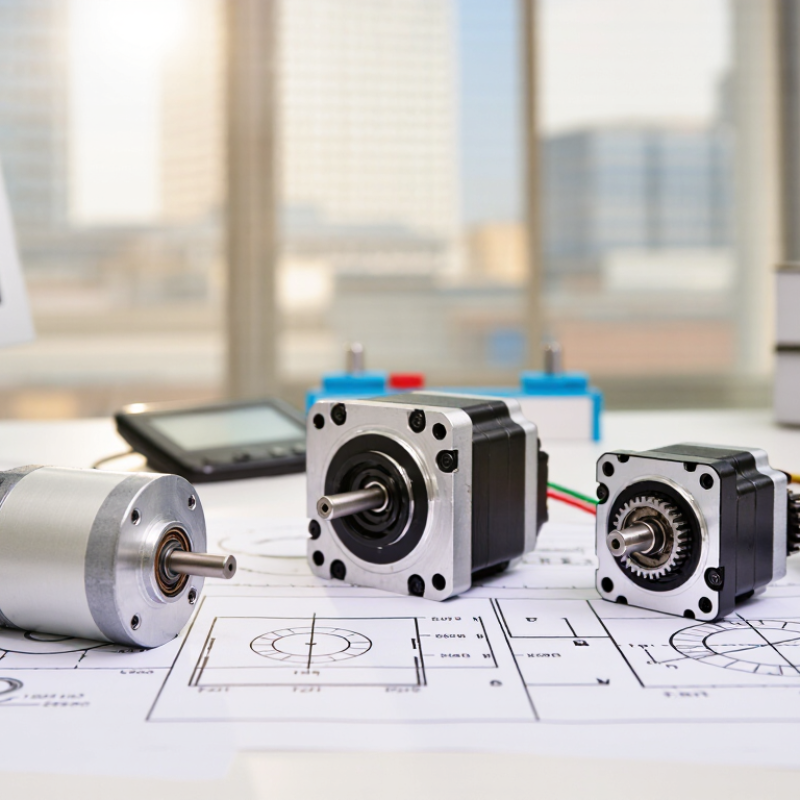
How to Choose the Best Small Electric Motors from China

Define the Application and Motor Performance Requirements

Before comparing small electric motors from China, define the machine’s real working conditions. Record voltage, frequency, available space, shaft diameter, mounting pattern, load type, and operating hours. A motor driving a quiet conveyor needs different performance from one starting a loaded pump. Measure the starting load, not only the rated load. This detail is often missed.

The International Energy Agency estimates that electric motor systems consume roughly 45% of global electricity. Efficiency therefore affects operating cost, heat, and service life. Specify continuous or intermittent duty, required speed, torque, acceleration time, and allowable temperature rise. Request test data for efficiency, noise, vibration, insulation, and protection rating. IEC 60034-30-1 provides efficiency-class guidance for many motor types, but the class alone cannot confirm suitability. A compact motor may meet an efficiency target while struggling during repeated starts.

In practical sourcing work, I also check performance at the actual voltage and frequency. Ask for a curve showing torque against speed. Confirm whether the motor includes an encoder, brake, gearbox, or controller. For a 24-volt motor in a small automated device, even a short cable can create a noticeable voltage drop. Leave thermal and torque margin, but avoid excessive oversizing. It increases cost and may reduce efficiency at light loads. The U.S. Department of Energy’s motor-system guidance emphasizes matching motor capacity to the driven load. That sounds obvious. It is not always practiced. A useful specification should describe the application clearly enough that two engineers would select the same motor.

Compare Small Electric Motor Types and Technical Specifications

Choosing a small electric motor from China starts with matching the motor type to the actual movement. Brushed DC motors suit simple, low-cost rotation and easy speed control. Brushless DC motors usually offer longer service life and lower maintenance. However, they need an electronic controller. Stepper motors provide accurate positioning, but they may lose torque at higher speeds. Gear motors add reduction gears for stronger, slower output.

Compare technical specifications under the same testing conditions. Check rated voltage, no-load speed, rated torque, stall torque, and current draw. A motor showing high torque may also require a large power supply. Measure the output shaft size, mounting holes, gear ratio, and allowable radial load. These details often decide whether installation is smooth or frustrating. Watch the duty cycle.

In practical testing, I run the motor under its expected load for several hours. I check temperature, noise, vibration, and speed stability. Ask the supplier for curves showing torque, efficiency, and current. Do not rely only on a no-load speed figure. It can look impressive but say little about working performance. Confirm insulation class, protection rating, connector quality, and batch consistency. Sample testing is useful, although one sample cannot represent every production batch. A written inspection plan makes comparison more reliable.

How to Choose the Best Small Electric Motors from China - Compare Small Electric Motor Types and Technical Specifications

Motor Type Typical Rated Voltage Typical Power Range Typical Speed Range Control Method Positioning / Speed Performance Main Advantages Common Limitations Suitable Applications Selection Guidance
Brushed DC Motor 3–24 V DC 1–100 W 1,000–20,000 rpm
depending on load and design
Voltage or PWM speed control; optional gearbox Good variable-speed control; limited repeatable positioning without an encoder Low initial cost, simple drive electronics, high starting torque, easy integration Brush and commutator wear, electrical noise, shorter service life at high speed or heavy duty Small pumps, fans, toys, valves, compact gear drives, portable equipment Best for simplicity and cost
Brushless DC Motor 5–48 V DC 5–300 W 1,000–30,000 rpm Electronic commutation using a dedicated controller; Hall sensors or sensorless feedback High speed stability and efficiency; closed-loop control improves regulation and positioning Long service life, low maintenance, high efficiency, lower acoustic and electromagnetic brush noise Requires an electronic controller; higher system cost and more complex wiring Cooling fans, compact compressors, laboratory equipment, robots, medical and battery-powered devices Best for efficiency and long life
Permanent-Magnet Synchronous Motor 12–48 V DC bus or low-voltage AC drive 20–750 W 500–6,000 rpm Inverter with sinusoidal or field-oriented control Excellent speed regulation and high torque density when used with a suitable drive High efficiency, smooth torque, compact size, good continuous-duty performance Requires a more advanced inverter and correct motor-drive matching Precision pumps, actuators, compact automation systems, energy-efficient machinery Best for high efficiency and smooth operation
Two-Phase Stepper Motor 12–48 V DC drive supply 5–300 W 0–1,500 rpm
usable torque decreases as speed rises
Pulse-and-direction driver; open-loop or closed-loop operation Typically 1.8° or 0.9° full-step angle; precise incremental motion at low and medium speed High holding torque, simple digital positioning, no encoder required for basic open-loop systems Can lose steps during overload; resonance, vibration, and heat may occur at high current 3D printers, CNC equipment, labelers, feeders, camera sliders, linear stages Best for economical positioning
Servo Motor 24–400 V DC or AC system voltage 50 W–1 kW 1,000–6,000 rpm Closed-loop servo drive with encoder or resolver feedback High accuracy, dynamic response, torque control, and reliable overload detection Accurate positioning, fast acceleration, stable torque, and strong disturbance rejection Higher purchase cost, more complicated tuning, and greater installation requirements Robotic joints, packaging machines, pick-and-place systems, CNC axes, inspection equipment Best for precision and dynamic motion
AC Induction Motor 110–240 V AC, single- or three-phase 60 W–1.5 kW 900–3,600 rpm at 50/60 Hz Direct AC supply or variable-frequency drive Stable continuous operation; speed varies with load when operated without a drive Robust construction, reliable continuous duty, low maintenance, widely available electrical infrastructure Larger and less efficient than many PM motors at small sizes; starting current can be high Fans, blowers, pumps, conveyors, compressors, and general industrial equipment Best for rugged continuous duty
Universal Motor 100–240 V AC or DC 100–1,500 W 5,000–25,000 rpm Voltage control, phase-angle control, or electronic speed controller Very high speed and strong starting torque; speed changes significantly with load High power-to-weight ratio, compact construction, strong torque at high speed Brush wear, higher noise, electromagnetic interference, and limited continuous-duty life Handheld tools, small appliances, compact vacuum systems, and high-speed equipment Use when compact high speed is essential
Shaded-Pole Motor 100–240 V AC 1–50 W 900–3,000 rpm Usually direct AC operation; limited speed control Basic fixed-speed operation with low starting torque and modest speed regulation Very simple, low cost, quiet enough for light-duty applications, and easy to install Low efficiency, low starting torque, limited control, and unsuitable for demanding loads Small fans, appliance timers, air vents, and low-power ventilation systems Use only for light, fixed-speed loads
Technical note: The figures shown are typical engineering ranges for small and compact motor systems, not guaranteed limits for every design. Actual performance depends on frame size, winding, magnet material, duty cycle, gearbox ratio, ambient temperature, controller settings, load profile, insulation class, and required protection rating. Confirm rated torque, continuous and peak current, efficiency, noise, vibration, ingress protection, shaft dimensions, connector type, and test requirements before placing an order.

Evaluate Chinese Manufacturers, Certifications, and Quality Systems

How to Choose the Best Small Electric Motors from China

Evaluating a Chinese motor manufacturer requires more than comparing prices. Request the company’s legal registration, production address, and current quality certificates. ISO 9001 can indicate a controlled quality system, but it does not guarantee motor performance. Check whether the certificate covers the actual factory and product category. Certifications must match your target market, voltage, safety requirements, and environmental rules.

Ask for process evidence, not only polished documents. A reliable factory should explain incoming material inspection, copper wire verification, rotor balancing, winding tests, and final performance checks. Request sample records showing resistance, no-load current, torque, vibration, noise, and temperature rise. Traceability matters. Each motor should connect to a production batch, test result, and component source.

Visit the facility when possible. Look for calibrated instruments, organized workstations, controlled storage, and technicians who understand failure analysis. During one supplier review, the test reports were complete, but the factory could not explain repeated bearing noise. That was a warning. Documentation looked strong, yet the system had a gap. I would also compare pilot-batch results with later production, because early samples may receive extra attention. Ask how the manufacturer handles defects, corrective actions, and customer complaints. Reliable answers should include dates, owners, and measurable follow-up.

Assess Customization, Pricing, Minimum Orders, and Lead Times

How to Choose the Best Small Electric Motors from China

A small motor is not a small decision. The U.S. Department of Energy reports that motor-driven systems consume more than 70% of industrial electricity. The IEA also estimates that electric motor systems use roughly half of global electricity. Efficiency, noise, heat, and service life deserve careful comparison.

Ask suppliers to confirm customization limits in writing. Check voltage, torque, shaft size, mounting holes, insulation class, IP rating, connectors, and control feedback. A lower unit price may exclude tooling, sample testing, packaging, or certification documents. Compare landed cost, not only the quotation. I have seen buyers accept a cheap prototype, then face expensive tooling changes. That mistake is avoidable, but not always.

Minimum order quantities affect cash flow. Request sample quantities before accepting a large production order. Ask whether the MOQ applies to each specification or the total order. Lead times should separate engineering, sampling, component purchasing, production, and inspection. Industry purchasing surveys often show continuing supply-chain variability, so add a realistic buffer. Never treat “15 days” as a guaranteed delivery date.

Tips: Send a detailed drawing and annual forecast. Request two quotations: standard and customized. Ask for recent test records, process controls, and a written change-notification policy. Confirm critical components before placing the order. Small details matter.

Verify Samples, Testing Results, Shipping, and After-Sales Support

When choosing small electric motors from China, treat the sample as evidence, not a promise. Request at least three units from the intended production line. Record shaft diameter, mounting holes, voltage, no-load speed, rated torque, current, noise, and temperature rise. Test them under your real load, not only on a workbench. A motor that feels smooth for five minutes may overheat during continuous operation. Keep dated photos, test conditions, and serial numbers. Small details matter.

Ask for complete testing results, including instrument accuracy, test duration, load conditions, and acceptance limits. Results without conditions are difficult to trust. Keep records. For critical applications, compare supplier data with an independent laboratory or qualified engineer. Repeat key tests after a pilot batch arrives. I once considered a clean report sufficient; that was too optimistic. Sample performance and mass production can differ. Require a written process for deviations, replacement units, and corrective actions.

Shipping deserves careful inspection. Confirm packaging against vibration, moisture, and impact, then clarify carton markings, quantity, lead time, insurance, and delivery responsibility. Photograph cartons before opening them. After-sales support should include a named contact, response time, warranty scope, spare-part availability, and failure-analysis reports. Ask how they handle a motor that fails intermittently. Do not accept “we will check” as the entire plan. No checklist catches everything. Review field data and adjust the next order when evidence proves your assumptions wrong.

FAQS

Which small electric motor type fits my application?

Match the motor to the required movement, control, and maintenance level. Brushed motors support simple rotation and easy speed control. Brushless motors usually last longer but require an electronic controller. Stepper motors position accurately but may lose torque at high speed. Gear motors provide slower, stronger output. Fit matters.

Which technical specifications should I compare?

Compare rated voltage, no-load speed, rated torque, stall torque, and current draw. Use identical testing conditions. Measure shaft diameter, mounting holes, gear ratio, and allowable radial load. High torque may require a larger power supply. Check the duty cycle.

How many samples should I request?

Request at least three units from the intended production line. Record voltage, speed, torque, current, noise, and temperature rise. Include serial numbers and dated photos. One sample can mislead. Test under the real load.

How long should practical motor testing continue?

Run each motor under its expected load for several hours. Check temperature, vibration, noise, and speed stability. A smooth motor after five minutes may overheat later. Five minutes proves little.

Why are test conditions important?

A no-load speed figure says little about working performance. Request test duration, load conditions, instrument accuracy, and acceptance limits. Compare important results with an independent laboratory or qualified engineer. Data needs context.

What quality details should I verify before ordering?

Confirm insulation class, protection rating, connector quality, and batch consistency. Repeat key tests after the pilot batch arrives. I once trusted a clean report too quickly. That assumption needed correction.

What should shipping inspection cover?

Check protection against vibration, moisture, and impact. Confirm carton markings, quantity, lead time, insurance, and delivery responsibility. Photograph cartons before opening them. Cartons can hide damage.

What after-sales support should a supplier provide?

Request a named contact, response time, warranty scope, spare-part availability, and failure-analysis reports. Ask how intermittent failures will be handled. “We will check” is not a complete plan.

How can inspection records improve later orders?

Keep test conditions, photos, serial numbers, and field-performance records. Use a written inspection plan with deviation and replacement procedures. Review failures after delivery. No checklist catches everything. Adjust later orders when evidence challenges earlier assumptions.

Conclusion

Choosing the best Small Electric Motors from China begins with clearly defining the application, operating environment, load, speed, torque, voltage, duty cycle, and expected service life. Buyers should compare motor types, dimensions, efficiency, noise, temperature performance, control options, and other technical specifications to identify the most suitable solution. A careful evaluation of manufacturers should include production capabilities, engineering experience, certifications, inspection procedures, and quality management systems.

Beyond technical performance, buyers should assess customization options, pricing, minimum order quantities, production capacity, and lead times. Before placing a large order, request samples and review testing results for performance, reliability, safety, and consistency. It is also important to confirm packaging, shipping arrangements, documentation, warranty terms, and after-sales support. By using a structured evaluation process and maintaining clear communication, businesses can reduce purchasing risks, control total costs, and establish a dependable supply relationship for their Small Electric Motors.

Henry

Henry

Henry is a dedicated marketing professional with a profound expertise in the company's offerings. With years of experience in the industry, he possesses an impressive understanding of the market dynamics and consumer behaviors that drive success. Henry is committed to sharing his insights through......