Precision Micros
Choosing the right step motors for your applications can be a daunting task. With so many options available, it's vital to understand your specific needs. As John Doe, an expert in motion control, once said, “Selecting the proper step motor is critical to achieve optimal performance.” His insights remind us of the importance of this decision.
Step motors are widely used in various applications. They control precise movements in robotics, CNC machines, and automation systems. However, the right choice depends on torque, speed, and stepping resolutions. Each application can have unique requirements that need careful consideration.
Many designers may overlook critical factors. For instance, the motor's size can impact performance. Misjudging specifications often leads to underwhelming results. It's essential to evaluate options thoroughly and reflect on their implications for your project. Your choice should align with both present and future needs. This way, you’ll enhance reliability and efficiency in your operations.
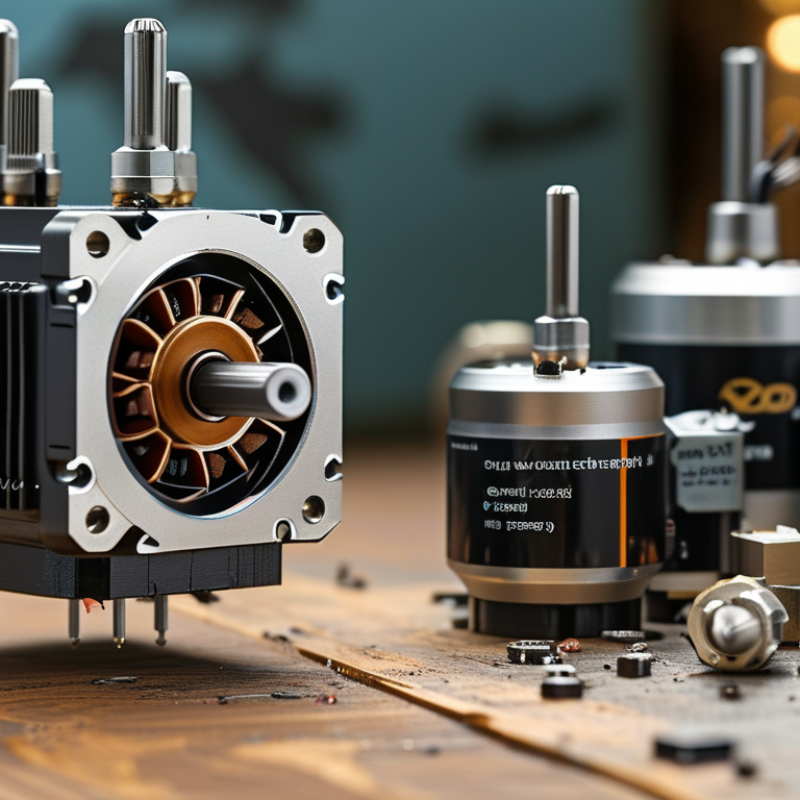
Step motors are essential in various applications, including robotics and CNC machines. They convert electrical pulses into precise mechanical movements. Understanding the types of step motors is vital for making informed choices.
There are two main types: permanent magnet step motors and variable reluctance step motors. Permanent magnet motors offer high torque and are straightforward to control. They excel in applications requiring precise positioning. On the other hand, variable reluctance motors are cost-effective but may lack the torque at higher speeds.
Key characteristics to consider are step angle and holding torque. A smaller step angle provides finer resolution, which is beneficial for intricate tasks. Holding torque determines the motor's ability to maintain position under load. It's crucial to assess the requirements of your application. Are the motor’s specifications matching your needs? Evaluating these aspects can lead to better performance and reliability.
When selecting step motors for specific applications, understanding requirements is key. Start by identifying the necessary torque. This value will determine the motor's ability to drive loads effectively. Assess both static and dynamic torque needs. Consider the weight of the load and any friction involved.
Next, evaluate the operating environment. Conditions such as temperature, humidity, and exposure to dust can influence motor performance. Will the motor be used indoors or outdoors? High humidity may require sealed motors. Think about the available space too. Size constraints may restrict options and affect cooling.
Lastly, consider control options. Different motors may require varying controllers and drive systems. Compatibility with existing systems is crucial. Opt for motors with good efficiency ratings to minimize energy loss. Reflecting on these aspects can guide you toward optimal motor selection.
When selecting step motors, understanding size and performance is crucial. Step motors convert electrical signals into precise rotational movement. They are ideal for applications requiring accurate positioning. However, not all step motors are suitable for every task.
One key factor is torque. The motor must provide sufficient torque for your application. If it’s underpowered, the motor may stall. Overestimating torque can lead to inefficiencies. Always match the motor's torque rating to the load requirements of your setup.
Another consideration is step angle. A smaller step angle results in smoother motion and better resolution. However, this may also require more complex control systems. You need to weigh the benefits against the potential complexities.
When evaluating control methods for step motor applications, understanding the types of control is crucial. There are two primary methods: open-loop and closed-loop control. Open-loop systems are simpler and more cost-effective. However, they may lack precision in position control under varying loads. Closed-loop systems offer feedback mechanisms. They adjust movements based on real-time data, ensuring higher accuracy and reliability.
Tips for selecting a control method include considering the application requirements. If precision is not a priority, open-loop might suffice. For robotics or CNC machines where accuracy is vital, closed-loop is preferred. Analyze the environment as well. Factors like temperature fluctuations or vibrations can impact performance. Choosing the right control method can significantly enhance the motor's efficiency and lifespan.
Monitoring the motor’s performance is essential. Regular assessments help identify potential issues early. This proactive approach can prevent costly failures. Users may reflect on their choices too. Sometimes, the easiest solution may not be the best one in the long run. Understanding the specific demands of your application leads to better decisions.
Choosing the right step motors involves careful consideration. An essential aspect is assessing quality and reliability. Reliable step motors perform consistently. They should maintain precise control over position and speed. You need to evaluate specifications such as torque ratings and step angles.
Tips: Look for motors with good thermal management. This helps prevent overheating. Check the manufacturer’s documentation for life-cycle details. Understanding how long the motor lasts in real applications is crucial. Also, consider environmental factors. Motors exposed to dust or moisture require special designs.
End-user reviews can be very helpful. They provide insights into real-world performance. Analyze the feedback focusing on durability and precision. It’s wise to consider warranty details. These often indicate the manufacturer’s confidence in their product. Not every motor meets the demands of every operation. You might need prototypes to test before committing fully.
| Parameter | Description | Importance | Recommended Value |
|---|---|---|---|
| Torque | The turning force of the motor | High | 1.5 - 3.0 Nm |
| Step Angle | The angle the motor rotates with each step | Medium | 1.8° (200 steps/rev) |
| Response Time | How quickly the motor can change direction | High | < 100 ms |
| Voltage Rating | The voltage required to operate the motor | Medium | 24 - 48 V |
| Current Rating | Maximum current the motor can handle | High | 1.0 - 3.0 A |
| Operating Temperature | Temperature range for motor operation | Medium | -20°C to 70°C |
| Life Span | Expected operational life of the motor | High | > 2 million steps |
: The two main types are permanent magnet step motors and variable reluctance step motors.
They offer high torque and are easy to control, ideal for precise positioning tasks.
Sufficient torque is necessary. An underpowered motor can stall, impacting performance negatively.
A smaller step angle enhances resolution and smooth motion, but may require complex control systems.
It’s advisable to test the motor with real loads. This offers practical insights beyond theoretical calculations.
Temperature and humidity can affect performance, especially in harsh environments.
Evaluate specifications like torque ratings and check for good thermal management to prevent overheating.
They provide real-world insights on durability and precision, highlighting potential issues or strengths.
Warranties indicate the manufacturer’s confidence in their product and can provide peace of mind.
Yes, testing prototypes may be needed to ensure the motor meets the specific operational demands.
When selecting the right step motors for specific applications, it is crucial to understand the various types and key characteristics of step motors. These motors can significantly impact the performance and efficiency of different systems. Identifying the application requirements, such as load, speed, and precision, plays a vital role in selecting the most suitable motor.
Additionally, factors such as sizing and performance must be carefully considered to ensure the motor can handle the operational demands. Evaluating control methods tailored for distinct applications is also essential, as it affects the overall functionality of the system. Lastly, assessing the quality and reliability of step motors during acquisition is imperative to guarantee long-term success and minimize maintenance issues. By thoroughly considering these aspects, one can effectively choose the right step motors for their specific needs.
